Search In-The-Sky.org
Events
|
1. |
|
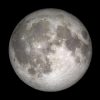
The Moon at apogee The Moon recedes to its orbit's furthest point from the Earth, making it appear fractionally smaller than at other times of the month. Wed, 01 Jan 2020 at 20:30 EDT (1,575 days ago) in Pisces |
|
2. |
|
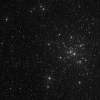
The cluster Messier 41 is well placed The open star cluster M41 (NGC 2287; mag 4.5) in Canis Major culminates at around midnight local time. Thu, 02 Jan 2020 (1,574 days ago) in Canis Major |
|
3. |
|
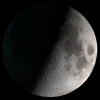
Moon at First Quarter The Moon reaches first quarter phase – appearing high in the sky at sunset and setting in the west at around midnight. Thu, 02 Jan 2020 at 23:46 EDT (1,573 days ago) in Cetus |
|
4. |
|
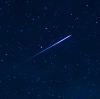
Quadrantid meteor shower 2020 The Quadrantid meteor shower reaches its peak. Sat, 04 Jan 2020 (1,572 days ago) in Bootes |
|
5. |

|
The Earth at perihelion The Earth reaches its closest point to the Sun. Sun, 05 Jan 2020 at 02:47 EDT (1,571 days ago) in Pisces |
|
6. |
|
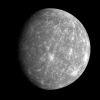
Mercury at superior solar conjunction Mercury passes around the far side of the Sun. Fri, 10 Jan 2020 at 10:32 EDT (1,566 days ago) in Sagittarius |
|
7. |
|
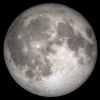
Penumbral lunar eclipse There will be an eclipse of the Moon, visible from Asia, Russia, Africa, Europe, Oceania, Greenland, north-eastern Canada and Alaska. Fri, 10 Jan 2020 at 14:10 EDT (1,566 days ago) in Gemini |
|
8. |
|
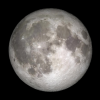
Full Moon The Moon reaches full phase and is visible for much of the night. Fri, 10 Jan 2020 at 14:21 EDT (1,566 days ago) in Gemini |
|
9. |
|
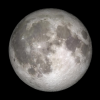
The Moon at aphelion The Moon recedes to its orbit's furthest point from the Sun, which happens each month around the time of full moon. Fri, 10 Jan 2020 at 16:08 EDT (1,566 days ago) in Gemini |
|
10. |
|
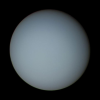
Uranus ends retrograde motion Uranus returns to its usual eastward motion after opposition. Fri, 10 Jan 2020 at 21:53 EDT (1,566 days ago) in Aries |
|
11. |
|
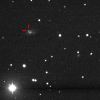
Supernova SN2020ue discovered A new supernova has been discovered in NGC 4636. Sat, 11 Jan 2020 (1,564 days ago) |
|
12. |
|
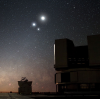
Close approach of the Moon and M44 The Moon and M44 pass close to each other. Sat, 11 Jan 2020 at 19:50 EDT (1,565 days ago) in Cancer |
|
13. |
|
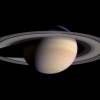
Saturn at solar conjunction Saturn is unobservable as it passes around the far side of the Sun – marking the end of one apparition and the beginning of the next. Mon, 13 Jan 2020 at 10:06 EDT (1,563 days ago) in Sagittarius |
|
14. |
|
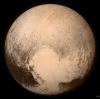
134340 Pluto at solar conjunction 134340 Pluto is unobservable as it passes around the far side of the Sun – marking the end of one apparition and the beginning of the next. Mon, 13 Jan 2020 at 15:15 EDT (1,563 days ago) in Sagittarius |
|
15. |
|
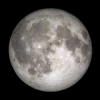
The Moon at perigee The Moon makes its monthly closest approach to the Earth, making it appear fractionally larger than at other times of the month. Mon, 13 Jan 2020 at 15:21 EDT (1,563 days ago) in Leo |
|
16. |
|
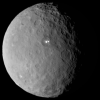
1 Ceres at solar conjunction 1 Ceres is unobservable as it passes around the far side of the Sun – marking the end of one apparition and the beginning of the next. Tue, 14 Jan 2020 at 01:24 EDT (1,562 days ago) in Sagittarius |
|
17. |

|
Asteroid 511 Davida at opposition Asteroid 511 Davida makes closest approach to the Earth. Tue, 14 Jan 2020 at 18:58 EDT (1,562 days ago) in Gemini |
|
18. |
|
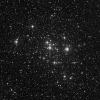
The cluster Messier 47 is well placed The open star cluster M47 (NGC 2422; mag 4.4) in Puppis culminates at around midnight local time. Wed, 15 Jan 2020 (1,561 days ago) in Puppis |
|
19. |
|
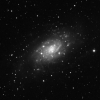
NGC 2403 is well placed NGC 2403 (mag 8.9), a spiral galaxy in Camelopardalis culminates at around midnight local time. Wed, 15 Jan 2020 (1,561 days ago) in Camelopardalis |
|
20. |
|
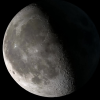
Moon at Last Quarter The Moon reaches last quarter phase – rising in the east at around midnight and appearing high in the sky by sunrise. Fri, 17 Jan 2020 at 07:59 EDT (1,559 days ago) in Virgo |


