
How are sunspots born? What does a black hole collision look like? How long does it take to make a full-size galaxy? This month on Naked Astronomy, we find out why people searching for pulsars might spot colliding black holes in their data, how galaxies may form quicker than predicted, and where in the sun sunspots first arise. Plus, news from gravity probe B, why there's no more space on the moon for craters, and how as many as half of all hot Jupiters may be spinning the wrong way. Like this podcast? Please help us by supporting the Naked Scientists
More details of the podcast are posted here, and on the Naked Astronomy website.
The sky on 6 Aug 2026
| The sky on 6 August 2026 | ||||||||||||||||||||||||||||||||||
|
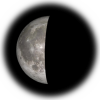
39% 23 days old |
All times shown in PDT.
|
|||||||||||||||||||||||||||||||||
Source
This information was taken from the Naked Astronomy website.
Image credit
© Naked Scientists