


Comet 15P/Finlay is forecast to reach the brightest point in its 1988 apparition on 22 October. At that time, it will lie at a distance of 1.03 AU from the Sun, and at a distance of 0.08 AU from the Earth.
From South El Monte on 22 October it will be visible in the evening sky, becoming accessible around 19:03 (PDT), 56° above your south-eastern horizon, as dusk fades to darkness. It will then reach its highest point in the sky at 20:05, 59° above your southern horizon. It will continue to be observable until around 00:58, when it sinks below 15° above your western horizon.
The events that comprise the 1988 apparition of 15P/Finlay are as follows:
| Date | Event |
| 03 Oct 1988 | Comet 15P/Finlay passes perihelion |
| 22 Oct 1988 | Comet 15P/Finlay reaches peak brightness |
| 23 Oct 1988 | Comet 15P/Finlay passes perigee |
The table below lists the times when 15P/Finlay will be visible from South El Monte day-by-day through its apparition:
| Date | Constellation | Comet visibility |
| 01 Oct 1988 | Sagittarius | Visible from 19:24 until 20:35 Highest at 19:24, 20° above S horizon |
| 03 Oct 1988 | Sagittarius | Visible from 19:19 until 20:49 Highest at 19:19, 22° above S horizon |
| 05 Oct 1988 | Sagittarius | Visible from 19:15 until 21:05 Highest at 19:15, 24° above S horizon |
| 07 Oct 1988 | Sagittarius | Visible from 19:11 until 21:23 Highest at 19:11, 26° above S horizon |
| 09 Oct 1988 | Sagittarius | Visible from 19:07 until 21:44 Highest at 19:07, 28° above S horizon |
| 11 Oct 1988 | Sagittarius | Visible from 19:03 until 22:08 Highest at 19:03, 31° above S horizon |
| 13 Oct 1988 | Sagittarius | Visible from 18:59 until 22:35 Highest at 18:59, 35° above S horizon |
| 15 Oct 1988 | Sagittarius | Visible from 18:55 until 23:05 Highest at 18:59, 39° above S horizon |
| 17 Oct 1988 | Capricornus | Visible from 18:51 until 23:39 Highest at 19:15, 44° above S horizon |
| 19 Oct 1988 | Aquila | Visible from 18:48 until 00:17 Highest at 19:33, 49° above S horizon |
| 21 Oct 1988 | Aquarius | Visible from 18:45 until 00:57 Highest at 19:54, 56° above S horizon |
| 23 Oct 1988 | Pegasus | Visible from 18:43 until 01:38 Highest at 20:16, 63° above S horizon |
| 25 Oct 1988 | Pegasus | Visible from 18:42 until 02:19 Highest at 20:40, 70° above S horizon |
| 27 Oct 1988 | Pegasus | Visible from 18:41 until 02:57 Highest at 21:04, 76° above S horizon |
| 29 Oct 1988 | Pegasus | Visible from 18:41 until 02:31 Highest at 21:26, 81° above S horizon |
| 31 Oct 1988 | Pegasus | Visible from 17:42 until 03:01 Highest at 20:47, 85° above S horizon |
| 02 Nov 1988 | Pegasus | Visible from 17:43 until 03:24 Highest at 21:04, 88° above S horizon |
| 04 Nov 1988 | Andromeda | Visible from 17:44 until 03:43 Highest at 21:20, 90° above N horizon |
| 06 Nov 1988 | Andromeda | Visible from 17:45 until 03:57 Highest at 21:32, 88° above N horizon |
| 08 Nov 1988 | Andromeda | Visible from 17:46 until 04:07 Highest at 21:42, 87° above N horizon |
| 10 Nov 1988 | Andromeda | Visible from 17:48 until 04:14 Highest at 21:49, 86° above N horizon |
A more detailed table of 15P/Finlay's position on each night is available here. A diagram of the orbit of 15P/Finlay is available here.
Finder chart
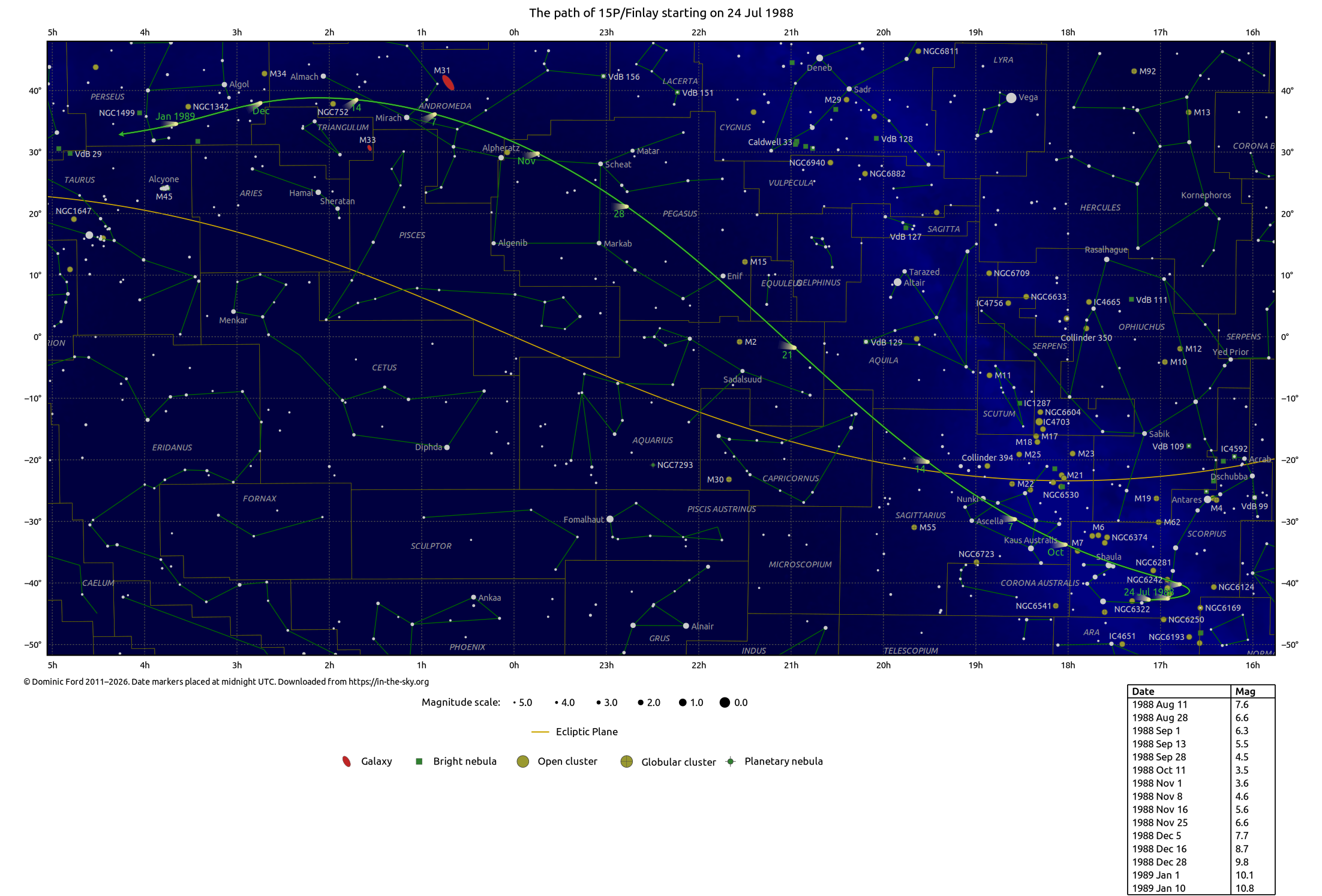
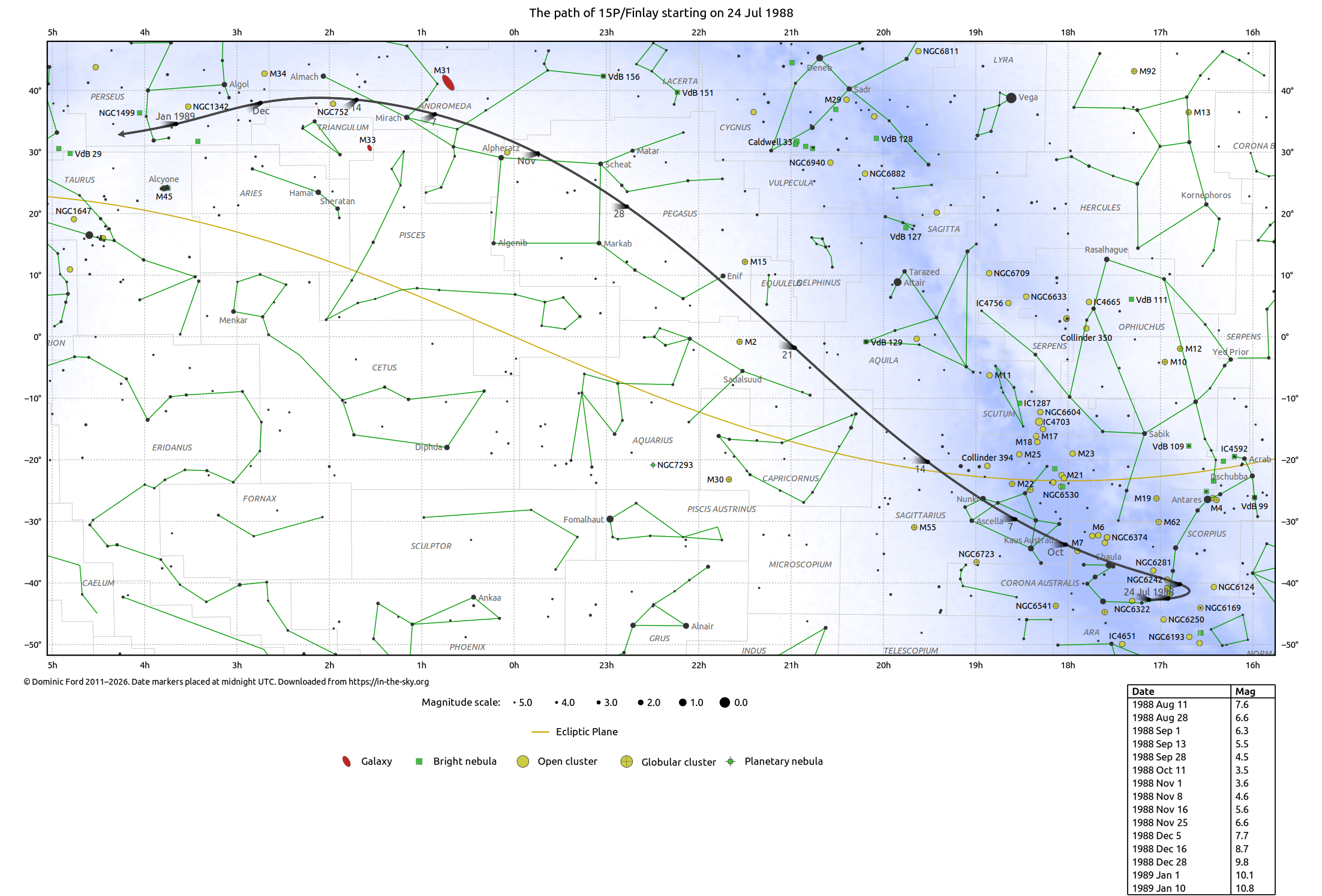
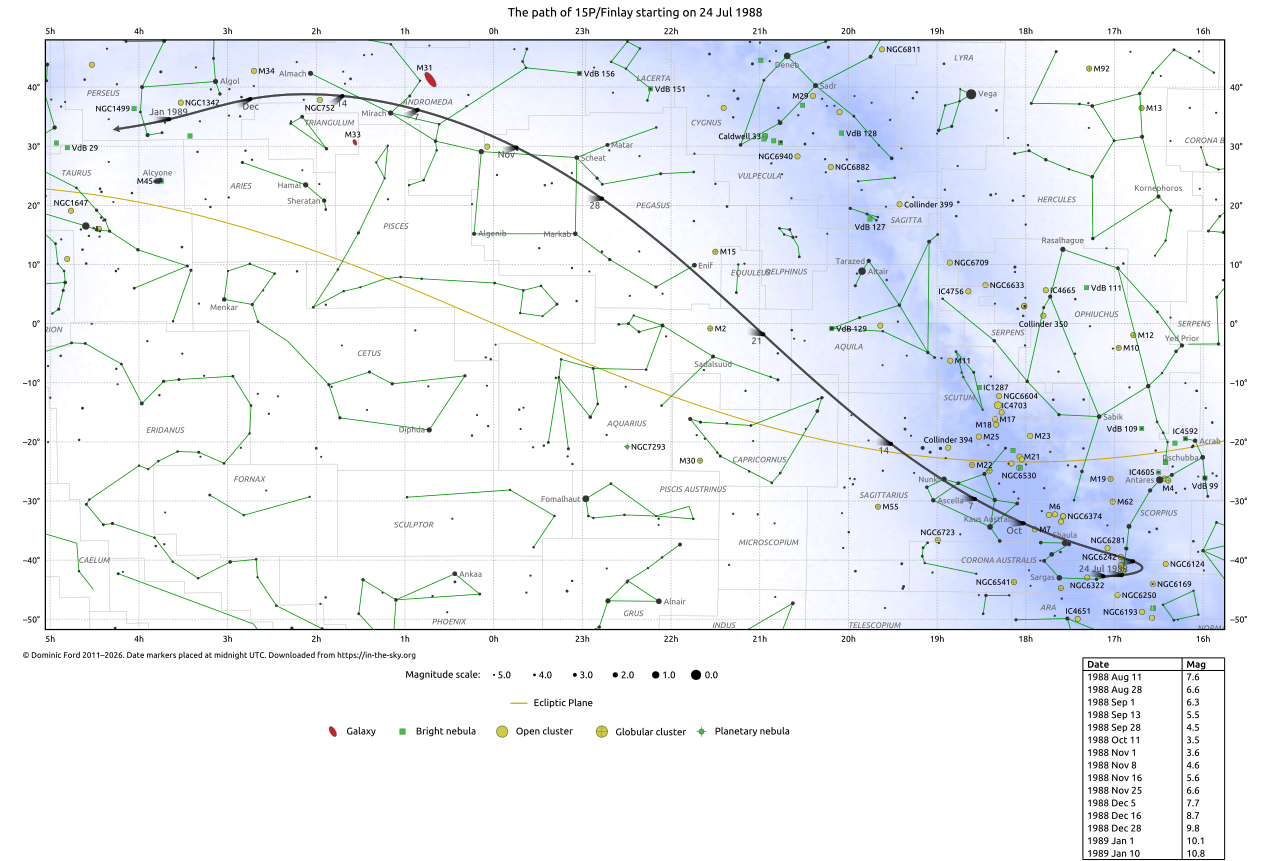
The chart below shows the path of 15P/Finlay over the course of its apparition, as calculated from the orbital elements published by the Minor Planet Center (MPC). It is available for download, either on dark background, in PNG, PDF or SVG formats, or on a light background, in PNG, PDF or SVG formats. It was produced using StarCharter.
Comet brightnesses
Comets are intrinsically highly unpredictable objects, since their brightness depends on the scattering of sunlight from dust particles in the comet's coma and tail. This dust is continually streaming away from the comet's nucleus, and its density at any particular time is governed by the rate of sublimation of the ice in the comet's nucleus, as it is heated by the Sun's rays. It also depends on the amount of dust that is mixed in with that ice. This is very difficult to predict in advance, and can be highly variable even between successive apparitions of the same comet.
In consequence, while the future positions of comets are usually known with a high degree of confidence, their future brightnesses are not. For most comets, we do not publish any magnitude estimates at all. For the few comets where we do make estimates, we generally prefer the BAA's magnitude parameters to those published by the Minor Planet Center, since they are typically updated more often.
No estimate for the brightness of comet 15P/Finlay is currently available.
The comet's position on 22 October 1988 will be:
| Object | Right Ascension | Declination | Constellation | Magnitude |
| Comet 15P/Finlay | 21h20m00s | 3°20'N | Equuleus | 2.8 |
The coordinates are given in J2000.0.
The sky on 27 Aug 2026
| The sky on 27 August 2026 | ||||||||||||||||||||||||||||||||||
|
99% 15 days old |
All times shown in PDT.
|
|||||||||||||||||||||||||||||||||

Source
This event was automatically generated on the basis of orbital elements published by the Minor Planet Center (MPC) , and is updated whenever new elements become available. It was last updated on 02 Jun 2026.
Image credit
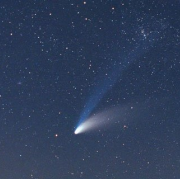
© Andy Roberts 1997. Pictured comet is C/1995 O1 Hale-Bopp.